Leave Your Message

How to Choose Power Station Equipment for Global Projects

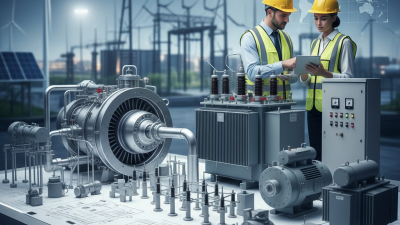
Selecting Power Station Equipment for a global project is not a catalogue exercise. It is an engineering decision shaped by climate, grid behavior, fuel quality, regulations, logistics, and maintenance capacity. A transformer proven in a dry European substation may struggle in coastal humidity or desert dust. Small assumptions become expensive failures.

Lord Kelvin, a pioneer in electrical engineering, stated, “If you cannot measure it, you cannot improve it.” This principle remains valuable when comparing turbines, generators, switchgear, transformers, control systems, and protection devices. Request verified efficiency curves, fault ratings, temperature limits, test certificates, and lifecycle cost data. Do not rely on impressive brochures alone. Factory acceptance testing matters. So does commissioning under real operating conditions.

Experienced project teams also examine supplier service networks, spare-part locations, cybersecurity controls, training quality, and local grid codes. A low purchase price can hide long outages, specialist tooling, or unavailable replacement bearings. Site details deserve physical attention: crane access, foundation loads, cable routes, ambient temperatures, salt exposure, and drainage. These are ordinary details. They often decide project reliability.

There is no universal equipment package. That point is easy to overlook. A technically elegant design may fail commercially when local technicians cannot maintain it. Even reliable predictions need review, because weather data, demand forecasts, and delivery schedules can change. The strongest choice balances performance, resilience, compliance, and practical support. It also leaves room for honest doubt, measured testing, and improvement after installation.

How to Choose Power Station Equipment for Global Projects

Project Requirements and Global Operating Conditions

How to Choose Power Station Equipment for Global Projects

Project Requirements and Global Operating Conditions

Choosing power station equipment for global projects begins with the site, not the catalog. Project requirements should define output, load profile, fuel access, redundancy, and maintenance capacity. A 50 MW plant serving a stable industrial load differs from a remote system with sharp evening peaks. Record ambient temperature, altitude, dust, humidity, and seismic exposure. These details affect cooling, insulation, filtration, and structural design. I have seen schedules fail because a “standard” enclosure overheated in a dry, elevated region. The drawing was correct. The assumption was not.

Global operating conditions also shape electrical decisions. Confirm grid frequency, voltage, fault levels, earthing practice, and permissible emissions before selecting generators, transformers, or switchgear. Coastal air can accelerate corrosion, while desert dust can block filters within days. Cold climates may require battery heating and fuel conditioning. Tropical sites need drainage, mold control, and careful cable sealing. Do not treat weather data as a checkbox. Use seasonal measurements when available, then test the design against worst credible conditions.

Procurement teams should ask who will operate the station after commissioning. A sophisticated control system is not reliable if local technicians cannot diagnose alarms. Specify spare parts, training, remote support, inspection intervals, and safe access routes. Leave room for imperfect information. Site surveys can miss future dust levels, water shortages, or transport limits. Build practical margins, but avoid buying oversized equipment without a load study. Independent verification of calculations, protection settings, and factory tests adds confidence before shipment.

How to Choose Power Station Equipment for Global Projects
Auxiliary systems should be matched to the local electrical environment. This chart compares representative nominal low-voltage AC supply values used in selected markets. Voltage, frequency, short-circuit level, grounding method, ambient temperature, altitude, and local codes must be verified during detailed engineering. Some markets use more than one standard voltage.

Power Station Equipment Types and System Compatibility

Choosing power station equipment for global projects starts with system compatibility, not catalog capacity. A generator, transformer, switchgear, protection relay, and control system must operate as one electrical network. Confirm voltage, frequency, phase sequence, short-circuit levels, insulation class, and grounding design before procurement. IRENA reported 473 GW of renewable capacity additions in 2023, showing how quickly mixed-generation systems are expanding (Renewable Capacity Statistics 2024). Compatibility is now a project discipline.

Grid conditions vary sharply between countries. Equipment must match local grid codes, fault-ride-through requirements, harmonic limits, and communication protocols. Transformers also need correct impedance and tap ranges for changing load patterns. Inverters require careful checks for weak-grid operation and reactive-power control. The IEA expects global electricity demand to grow by an average 3.4% annually from 2024 to 2026 (Electricity 2024). Small assumptions can become expensive failures.

Climate data deserves equal attention. High humidity, salt exposure, dust, altitude, and extreme heat affect cooling, insulation, enclosure ratings, and battery life. Site acceptance tests should verify alarms, interlocks, protection settings, and remote signals under realistic conditions. A recurring lesson is uncomfortable: equipment that passes factory tests may still fail after installation. Interfaces are often the weak point. Engineers should leave documented margins, test spare communication paths, and review every assumption with local operators before energization.

Technical, Safety, and Environmental Performance Criteria

Choosing power station equipment for global projects demands more than matching rated output to a load schedule. In field assessments, I check generator capacity, transformer impedance, switchgear ratings, and protection coordination together. A 100 MW plant may still miss its target if auxiliary loads, altitude, heat, or weak-grid conditions are ignored. Technical data should include efficiency curves, short-circuit withstand, harmonic limits, spare-part needs, and control-system compatibility. Request test certificates and independent verification where practical. A neat datasheet can hide difficult maintenance.

Safety performance starts with credible risk controls, not attractive compliance language. Specify arc-flash studies, emergency shutdowns, fire detection, grounding, access clearances, and lockout procedures. Equipment should tolerate dust, humidity, salt air, vibration, and temperature swings at the actual site. Environmental criteria deserve equal weight. Compare fuel consumption, noise at property boundaries, refrigerant impact, water use, spill containment, and end-of-life recovery. A technically superior option may fail if local teams cannot manage its waste safely. Record that limitation clearly.

Tips: Build a weighted evaluation matrix before tenders. Score safety and lifecycle emissions. Ask for failure-rate data, maintenance intervals, and site references. Include local engineers in factory acceptance tests. Leave contingency for unknowns. My reviews have missed small cable-routing issues, so independent constructability checks remain valuable. Revisit assumptions after commissioning; operating evidence can challenge the original model.

How to Choose Power Station Equipment for Global Projects - Technical, Safety, and Environmental Performance Criteria

Equipment Type Typical Project Scale Typical Electrical Efficiency or Performance Operating Flexibility Design Life Key Technical Criteria Primary Safety Criteria Operational Emissions and Environmental Profile Relevant International Standards Global Project Suitability
Combined-Cycle Gas Turbine 100–1,000 MW per power block Approximately 55–62% net efficiency, depending on ambient conditions and plant configuration Moderate to high; suitable for base-load, load-following, and daily cycling when designed for flexible operation 25–35 years Fuel-gas pressure and quality, ramp rate, minimum stable load, start-up time, grid frequency response, cooling system, and heat-recovery steam generator configuration Gas detection, emergency shut-off valves, fire and explosion protection, pressure-relief systems, hazardous-area classification, and turbine overspeed protection Approximately 350–500 kg CO₂e/MWh during operation, with materially lower emissions than coal-fired generation. Water use depends on cooling technology; air cooling generally reduces water demand ISO 13631, ISO 3977, ASME B31.1, IEC 60034, NFPA 85, IEC 61511 Regions with reliable natural-gas infrastructure, moderate-to-high electricity demand, and requirements for dispatchable lower-carbon generation
Open-Cycle Gas Turbine 20–300 MW per unit Approximately 30–42% net efficiency High; fast start-up and rapid ramping make it suitable for peak demand and renewable balancing 20–30 years Start-up frequency, hot-section durability, ambient-temperature derating, fuel flexibility, black-start capability, and exhaust back-pressure Combustible-gas isolation, fire detection, ventilation, acoustic control, emergency shutdown, and turbine overspeed protection Approximately 500–700 kg CO₂e/MWh during operation. Lower water consumption than steam-cycle plants when air-cooled ISO 3977, ISO 13631, ASME B31.1, NFPA 85, IEC 61511 Remote grids, emergency capacity, peaking plants, and power systems with high short-term reserve requirements
Reciprocating Gas Engine 1–20 MW per engine; multiple engines can be configured in modular plants Approximately 40–50% electrical efficiency for large, modern gas engines Very high; fast start-up, strong part-load performance, and efficient modular dispatch 20–30 years with scheduled overhauls Engine availability, cylinder balance, lubrication system, gas quality, vibration, exhaust-treatment system, and modular redundancy Gas detection, crankcase explosion protection, fire suppression, pressure relief, emergency stop systems, and maintenance isolation procedures Approximately 400–550 kg CO₂e/MWh during operation. Methane-slip control is important when assessing total greenhouse-gas impact ISO 8528, ISO 3046, NFPA 37, IEC 60034, IEC 61511 Distributed generation, island grids, microgrids, industrial facilities, and projects requiring modular expansion
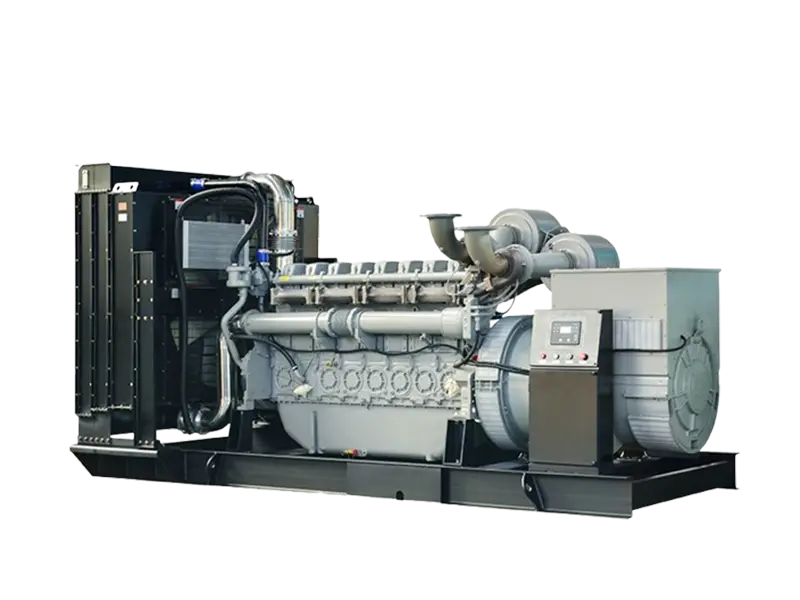
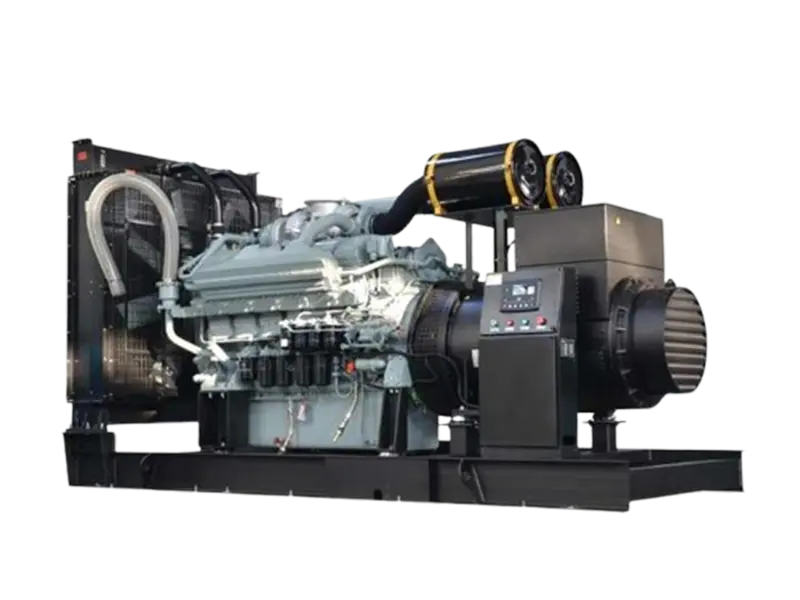
Diesel Reciprocating Generator 0.1–20 MW per generator; multiple sets for larger plants Approximately 35–48% electrical efficiency, depending on size and loading Very high; rapid start-up and black-start capability, but long-term low-load operation should be avoided 15–25 years with scheduled major overhauls Fuel storage capacity, fuel quality, load-step response, synchronization, cooling, exhaust back pressure, spare-parts availability, and maintenance intervals Fuel bunding, spill containment, fire detection, automatic shutdown, battery safety, ventilation, exhaust-temperature monitoring, and noise control Approximately 650–800 kg CO₂e/MWh during operation, in addition to nitrogen oxides, particulate matter, sulfur oxides, and fuel-spill risks. Emissions depend strongly on fuel quality and exhaust treatment ISO 8528, ISO 3046, NFPA 37, NFPA 110, IEC 60034 Emergency power, isolated grids, construction sites, remote facilities, and locations without dependable gas infrastructure
Hydroelectric Turbine and Generator 10–5,000 MW per station; site potential is resource-dependent Approximately 85–93% turbine-generator efficiency at or near rated output High for reservoir and pumped-storage projects; run-of-river plants may have limited dispatch flexibility 50–100 years for civil works; major electromechanical refurbishment is commonly required during the asset life Hydrology, head and flow range, sediment management, cavitation resistance, dam safety, grid inertia, ramp rate, and fish-passage design Dam-break analysis, flood routing, emergency action plans, gate reliability, worker protection, confined-space controls, and electrical isolation Zero direct operational CO₂ emissions. Lifecycle emissions vary by reservoir characteristics, land-use change, methane formation, and construction materials. Water consumption is generally associated with evaporation rather than process use IEC 60193, IEC 60041, IEC 62256, ICOLD dam-safety guidance, IEC 60034 Regions with suitable elevation difference, dependable water resources, and a robust framework for environmental and social impact management
Utility-Scale Solar Photovoltaic 1–1,000 MWac per project Module conversion efficiency commonly 18–24%; project capacity factor typically 15–30%, depending on solar resource and tracking Variable and weather-dependent; dispatchability improves when paired with battery storage or flexible generation 25–35 years for modules; inverters commonly require replacement or major refurbishment during project life Solar irradiation, land availability, tracker performance, DC/AC ratio, inverter clipping, soiling, degradation, grid-code compliance, and energy storage integration DC arc detection, rapid shutdown, grounding, lightning protection, fire access, thermal-event control for storage systems, and electrical isolation Zero direct operational CO₂ emissions and very low operating water use, except for cleaning. Lifecycle emissions are commonly estimated at approximately 20–50 g CO₂e/kWh, depending on manufacturing and project conditions IEC 61215, IEC 61730, IEC 62446-1, IEC 62109, IEC 60364-7-712, IEC 62930 High-solar-resource regions, remote grids, distributed generation, and projects seeking low operational emissions and modular construction
Onshore Wind Turbine 2–7 MW per turbine; multi-turbine projects commonly range from 20–500 MW Project capacity factor typically 30–50%, depending on wind resource, turbine height, and site layout Variable and weather-dependent; short-term forecasting and storage or flexible generation improve system integration 20–30 years Wind-speed distribution, turbulence intensity, wake losses, foundation design, grid-code compliance, icing risk, gearbox or direct-drive configuration, and transport logistics Blade-throw risk assessment, lightning protection, ice detection, tower access, fall protection, fire monitoring, emergency descent, and exclusion zones Zero direct operational CO₂ emissions and negligible operational water use. Lifecycle emissions are commonly estimated at approximately 8–20 g CO₂e/kWh. Noise, visual impact, birds, and bats require site-specific assessment IEC 61400 series, IEC 61400-1, IEC 61400-12-1, IEC 61400-24, ISO 12494 Areas with strong and consistent wind resources, suitable transmission capacity, adequate transportation access, and acceptable environmental conditions
Battery Energy Storage System 1–500 MW; commonly configured for 1–4 hours of energy duration Approximately 85–95% round-trip efficiency; performance varies by chemistry, temperature, and operating profile Very high; sub-second response, frequency regulation, peak shifting, renewable firming, and black-start support when properly engineered 10–20 years, depending on chemistry, cycling depth, temperature, and warranty conditions Usable energy, power-to-energy ratio, degradation curve, auxiliary consumption, thermal management, state-of-charge limits, augmentation strategy, and control-system interoperability Thermal-runaway prevention, battery-management system, gas detection, fire detection and suppression, thermal barriers, emergency response planning, spacing, and ventilation Zero direct operational CO₂ emissions. Lifecycle impact depends on cell chemistry, mining, manufacturing, replacement, recycling, and electricity used for charging. Water use is generally low during operation IEC 62933, IEC 62477-1, UL 9540, UL 9540A, NFPA 855, IEC 62619 Power systems with high renewable penetration, constrained transmission, peak-demand charges, weak grids, and applications requiring fast-response reserves
Steam Turbine Generator 50–1,000 MW per unit, depending on the heat source Approximately 35–47% net electrical efficiency in large fossil or biomass plants; lower when supplied by low-temperature heat sources Low to moderate; slower start-up and ramping than gas engines or gas turbines, although flexible designs are available 30–40 years Steam conditions, boiler or heat-source compatibility, condenser vacuum, cooling-water system, turbine heat rate, vibration, water chemistry, and thermal-cycle fatigue Boiler and pressure-vessel protection, safety valves, water-treatment controls, steam isolation, turbine overspeed protection, and high-temperature equipment guarding Emissions depend on the heat source. Coal-fired systems can exceed 800–1,000 kg CO₂e/MWh, while biomass and waste-derived systems vary significantly by fuel origin and accounting method. Cooling-water demand can be substantial IEC 60045, ASME Boiler and Pressure Vessel Code, NFPA 85, IEC 60034, IEC 61511 Large centralized plants, industrial cogeneration, biomass projects, waste-to-energy facilities, and sites with a stable steam or waste-heat source

Notes: Values are representative engineering ranges for preliminary international project screening. Actual performance depends on site elevation, ambient temperature, fuel quality, cooling method, operating profile, grid requirements, local regulations, and project-specific design. Emission figures are indicative operational or lifecycle ranges as identified in each row and should be verified through a project-specific environmental assessment.

Supplier Evaluation, Standards, and Lifecycle Support

How to Choose Power Station Equipment for Global Projects

Supplier Evaluation, Standards, and Lifecycle Support

Choosing power station equipment starts with the supplier, not the catalog. Request verified project references from climates similar to your site. A desert installation faces dust, heat, and limited water. A coastal project needs stronger corrosion protection. Ask for factory audit records, quality procedures, and recent test results. Paperwork alone is not enough.

Review compliance with applicable IEC, ISO, IEEE, and local grid standards. Confirm each certificate applies to the exact equipment configuration. Check protection settings, insulation performance, short-circuit ratings, and communication protocols. Witness factory acceptance testing when possible. Record open defects and require signed corrective actions before shipment. Small gaps become expensive later.

Lifecycle support deserves equal attention. Evaluate spare-parts availability, remote diagnostics, technician training, and emergency response times. A supplier should provide clear manuals, maintenance schedules, and software update controls. Confirm local service capability, not only a distant support office.

During one project, our team underestimated humidity inside control cabinets. The equipment passed initial tests, but ventilation required redesign. That mistake changed our inspection checklist.

Reliable support means listening after commissioning, when operating data exposes weaknesses. Include warranty boundaries, service escalation steps, and end-of-life plans in the contract. Some suppliers resist detailed commitments. That deserves careful review.

Procurement, Installation, Testing, and Project Handover

How to Choose Power Station Equipment for Global Projects

Procurement begins with the project site, not the equipment catalog. Climate, grid codes, fuel quality, transport routes, and local skills must shape every specification. The International Energy Agency reported that annual grid investment must exceed 600 billion US dollars by 2030. That scale makes standardization valuable, but regional compliance remains essential. Select equipment with documented efficiency, protection settings, spare-part availability, and service procedures. A cheaper purchase can become expensive during customs delays or commissioning failures.

Installation needs a controlled sequence. Confirm foundations, cable routes, earthing, ventilation, and lifting plans before delivery. Keep inspection records with photographs and serial numbers. Field teams should verify torque values and insulation resistance, rather than trusting factory documents alone. Small gaps matter.

Testing should follow approved procedures, from component checks to full-load trials. Independent witnesses can improve credibility, especially for protection relays, synchronization, emergency shutdowns, and performance guarantees. The International Renewable Energy Agency recorded 473 gigawatts of renewable capacity additions in 2023. Rapid deployment increases pressure on testing teams, and rushed schedules create avoidable weaknesses.

Project handover is more than signing a certificate. Deliver updated drawings, test results, calibration records, operating limits, training attendance, and unresolved-item lists. The World Bank emphasizes reliable infrastructure management through clear operational capacity and accountability. One practical lesson is often missed: operators need realistic drills, not only manuals. Handover should expose remaining risks honestly, even when that delays commercial acceptance.