Leave Your Message

2026 Top Diesel Generator Supply Guide for Global Buyers

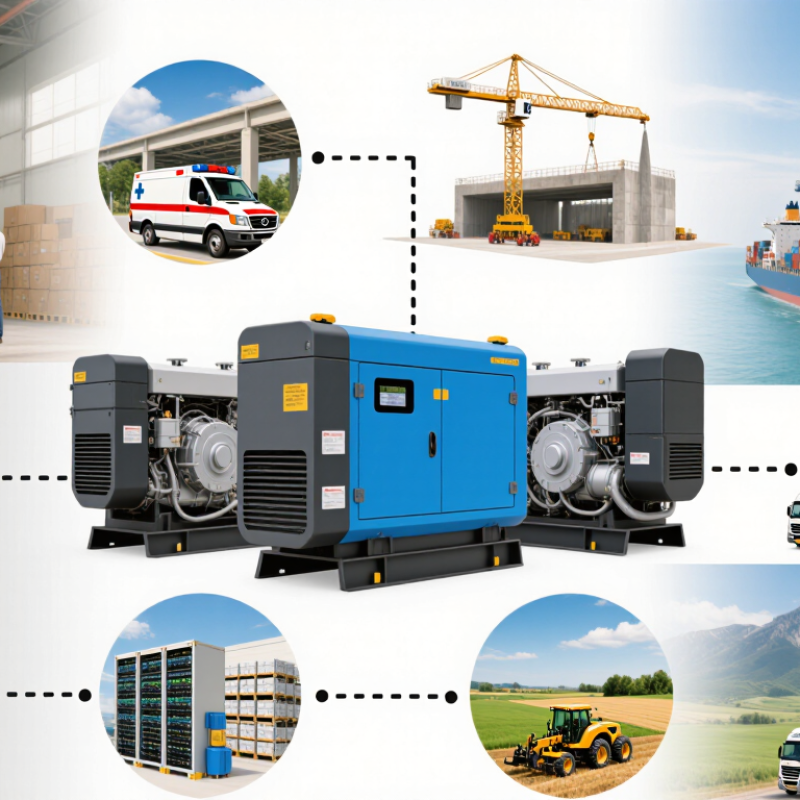
The 2026 Top Diesel Generator Supply Guide for Global Buyers examines how dependable power equipment is sourced, evaluated, and delivered across changing markets. Diesel generators remain essential for hospitals, construction sites, data centers, farms, ports, and remote facilities. A failed shipment can leave more than an empty warehouse. It can stop a concrete pour, interrupt cold storage, or silence critical medical equipment.

Cummins Chairman and CEO Tom Linebarger once stated, “We have to make sure that we are providing reliable power to our customers.” This principle defines responsible Diesel Generator Supply. Buyers should look beyond the nameplate rating. They need to verify prime and standby capacity, engine origin, alternator quality, fuel consumption, noise control, emissions documentation, and service support. A 500 kVA unit may look suitable on paper. Its real performance depends on altitude, ambient temperature, load profile, installation quality, and maintenance access.

Details matter.

This guide connects factory experience with practical purchasing decisions. It compares supplier capabilities, inspection procedures, container loading, warranty terms, spare-parts planning, and after-sales response. It also considers hybrid systems and lower-emission technologies without treating them as magic solutions. Some buyers still underestimate logistics risks. Others focus too heavily on the lowest quotation. Both approaches can create expensive surprises.

No supplier is perfect. No specification sheet tells the whole story. Global buyers should ask harder questions, request evidence, and leave room for technical review before signing. Reliable power begins with reliable decisions.

2026 Top Diesel Generator Supply Guide for Global Buyers

Diesel Generator Basics and Key Specifications for Global Buyers

For global buyers, a diesel generator is more than an engine and alternator. It is a controlled power system for uncertain grid conditions. The IEA’s Electricity 2024 report estimates that data centres, artificial intelligence, and cryptocurrencies used about 460 TWh globally in 2022. Their demand could exceed 1,000 TWh by 2026. Reliable standby capacity is becoming harder to treat as an optional purchase.

Start with the load profile. Standby rating covers emergency outages. Prime rating supports variable loads for extended periods. Continuous rating suits steady operation. Confusing these categories can shorten engine life.

Check rated kW, kVA, and power factor, commonly 0.8. Confirm voltage, phase, and frequency, such as 400 V, three-phase, and 50 Hz. Motors may require extra starting capacity. A simple running-load total is not enough.

Fuel consumption should be compared at 25%, 50%, 75%, and 100% load. Ask for litres per hour, not only a headline efficiency figure. Calculate tank size from required autonomy, site access, and local safety rules.

Temperature and altitude also reduce available output, so request derating curves based on the installation site. ISO 8528 provides a useful framework for generator performance and rating definitions.

In practice, I treat the first sizing calculation as provisional. A missing compressor surge or neglected harmonic load can change the specification quickly. Noise level, emissions compliance, enclosure protection, automatic transfer performance, and service access deserve equal attention. A quiet enclosure is valuable, but poor airflow can become an expensive mistake.

How to Assess Power Requirements and Select the Right Generator

2026 Top Diesel Generator Supply Guide for Global Buyers

How to Assess Power Requirements and Select the Right Generator

Choosing a diesel generator starts with a measured load profile, not a guess based on building size. List every device, its running watts, and its starting demand. Motors, pumps, compressors, and elevators may briefly require two to seven times their normal power. Add essential loads separately from nonessential equipment. This prevents an oversized purchase and reduces unnecessary fuel consumption.

Convert the total demand into kilovolt-amperes using the expected power factor. Then add a practical reserve, commonly 15% to 25%, for future expansion and unstable conditions. A tidy spreadsheet can still lie. Check the site directly, especially where welding tools, refrigeration, or variable-speed drives operate. Record altitude, ambient temperature, humidity, and available ventilation. These conditions can reduce engine and alternator output.

Select a generator with standby or prime-rated capacity that matches its duty cycle. Confirm voltage, frequency, phase configuration, and automatic transfer requirements before ordering. A qualified electrical professional should verify protection settings and local installation rules. Ask for fuel consumption at 25%, 50%, 75%, and 100% load. Test the unit under realistic load, not only during a short no-load start. Maintenance access matters too; a cramped service panel can create expensive delays. I once underestimated cable length on a remote installation, and voltage drop became an avoidable problem. That detail deserves attention.

2026 Top Diesel Generator Supply Guide for Global Buyers

Estimated Diesel Fuel Consumption at 75% Rated Load

Fuel consumption increases approximately in proportion to generator output. The estimates use a typical diesel fuel-use factor of about 0.25 liters per kilowatt-hour at 75% load, with a power factor of 0.8. Actual results vary according to engine efficiency, altitude, ambient temperature, maintenance condition, and load profile. Buyers should select a generator with sufficient capacity for continuous demand, starting current, and future expansion.

Global Diesel Generator Standards, Certifications, and Compliance

Global diesel generator procurement begins with the installation standard, not the quotation. ISO 8528 defines performance classes, ratings, and test conditions for engine-generator sets. IEC 60034 supports requirements for rotating electrical machines and alternator performance. Local grid rules may add earthing, protection, synchronization, and power-quality requirements. A 400 kVA set for a hospital needs different evidence than one serving a remote construction site. Confirm prime or standby duty before comparing data sheets. Small errors cost money.

Compliance depends on destination, fuel, emissions, noise, and electrical configuration. Buyers may need CE or UKCA marking, EMC evidence, low-voltage assessments, and machinery documentation. North American projects can require recognized safety certification and emissions compliance under applicable federal or state rules. Other markets may enforce equivalent national schemes. Check every document. Ask for serial-number-linked test reports, declarations, wiring diagrams, protection settings, and factory acceptance test records. A certificate alone is not proof. Check its scope, issuer, date, and exact model. Documents should match the delivered enclosure, controller, alternator, and engine.

A reliable supplier should explain which standard each test addresses. Request witnessed load-bank testing at 25%, 50%, 75%, and 100% load when practical. Record voltage stability, frequency response, fuel use, exhaust data, and acoustic readings. Site acceptance should verify grounding, ventilation, fuel storage, emergency-stop circuits, and transfer switching. Practical teams also review maintenance access and spare-part traceability. I would not treat a generic compliance logo as final approval. Requirements change, and technical assumptions can be wrong. Do not guess. Have an independent engineer review the package before shipment, especially for hospitals, data centers, and parallel-generator systems.

Supplier Evaluation, Pricing, Shipping, and Import Considerations

2026 Top Diesel Generator Supply Guide for Global Buyers

Choosing a diesel generator supplier requires more than comparing headline prices. Ask for verified engine specifications, factory test records, warranty terms, and recent export references. A serious supplier should explain fuel consumption at 50%, 75%, and 100% load. Request clear details on alternator output, control systems, noise levels, and maintenance access. Photos help, but inspection reports provide stronger evidence.

Pricing depends on power rating, enclosure type, emissions configuration, accessories, and order quantity. Confirm whether the quotation includes packaging, testing, spare parts, and inland delivery. Shipping terms need careful review. Check the loading port, estimated transit time, container dimensions, and insurance responsibility. A small mismatch in generator height can create expensive handling problems. I have seen buyers focus on unit cost and overlook port charges. That approach rarely stays cheap.

Tips: Compare at least three written quotations. Use the same technical specification for each supplier. Ask for a pre-shipment inspection, especially for large orders. Confirm import duties, electrical standards, documentation, and local registration requirements before payment. Keep copies of the commercial invoice, packing list, certificate of origin, and test report. Also, leave room for uncertainty. Customs procedures and freight rates can change quickly. A supplier’s confident answer is useful, but independent verification is safer.

2026 Top Diesel Generator Supply Guide for Global Buyers — Supplier Evaluation, Pricing, Shipping, and Import Considerations
Generator Class Typical Prime Output Common Application Indicative Factory Price
(USD, 2026 Planning Range)
Approx. Fuel Consumption
(L/h at 75% Load)
Typical Shipping Profile Estimated Ocean Freight Allowance
(USD, Main-Port Basis)
Typical Production Lead Time Key Import and Compliance Checks
A. Capacity-Based Procurement and Cost Benchmarks
20 kVA 16 kW Small offices, retail stores, telecom sites, residential backup $7,000–$14,000 Approximately 3.5–4.5 L/h Usually palletized or packed in a compact wooden case; shared-container shipment is common $250–$700 per unit when consolidated; port and local charges excluded 3–6 weeks Confirm voltage, frequency, phase configuration, noise limits, fuel-tank regulations, and electrical safety documentation
50 kVA 40 kW Commercial buildings, workshops, farms, small construction sites $12,000–$24,000 Approximately 8–10 L/h Skid-mounted or silent canopy model; normally suitable for shared-container or 20-foot-container loading $400–$1,000 per unit when consolidated; local charges excluded 4–7 weeks Request alternator data, controller functions, emergency-stop arrangement, grounding instructions, and emissions information
100 kVA 80 kW Factories, hotels, supermarkets, clinics, and medium-sized facilities $20,000–$40,000 Approximately 15–19 L/h Typically a skid or acoustic enclosure; one or more units can usually be loaded in a 20-foot container $600–$1,500 per unit when consolidated; local charges excluded 4–8 weeks Verify transient-response test results, generator-set rating standard, phase balance, cable-entry layout, and service access
250 kVA 200 kW Industrial plants, data rooms, large commercial buildings, and infrastructure projects $42,000–$75,000 Approximately 36–46 L/h Usually shipped in a 20-foot container or as an out-of-gauge breakbulk unit, depending on enclosure and fuel-tank size $1,200–$3,000 per unit; special handling may apply 5–9 weeks Check lifting points, container dimensions, exhaust routing, fuel-storage rules, automatic-transfer-system compatibility, and site noise limits
500 kVA 400 kW Manufacturing facilities, hospitals, data centers, mining, and large construction projects $78,000–$145,000 Approximately 70–90 L/h Commonly requires a 20-foot container, flat-rack, or breakbulk arrangement; foundation and lifting plans are essential $2,500–$6,500 per unit; terminal, documentation, and special-equipment fees excluded 6–12 weeks Require load-bank test evidence, parallel-operation details, protection settings, harmonic data, emission certification, and maintenance access drawings
1,000 kVA 800 kW Large industrial sites, utility support, major infrastructure, and mission-critical facilities $150,000–$280,000 Approximately 140–180 L/h Normally shipped in a 20-foot or 40-foot container, on a flat-rack, or as project cargo; route and crane availability must be confirmed $5,000–$15,000 per unit; project-cargo surcharges may apply 8–16 weeks Confirm short-circuit calculations, synchronization scheme, protection coordination, emissions rules, transformer interface, and civil works requirements
B. Supplier Evaluation Framework
Manufacturing Capability Recommended evaluation weight: 20% Review production capacity, quality-control procedures, test equipment, traceability, and experience with the requested power class Preferred evidence: factory audit, production photographs, serial-number records, inspection plan, and recent test reports Warning signs: unclear factory location, inconsistent specifications, inability to provide routine-test records, or dependence on unverified subcontractors
Technical Compliance Recommended evaluation weight: 20% Match rated voltage, frequency, phase, prime/standby rating, ambient conditions, insulation class, and control-panel functions to the project specification Request datasheets, single-line diagrams, protection settings, fuel-consumption curves, noise data, and load-bank test procedures Check whether certificates apply to the exact generator-set model rather than only to an engine or alternator component
After-Sales Support Recommended evaluation weight: 15% Assess warranty duration, response time, spare-parts availability, technician coverage, commissioning support, and remote troubleshooting capability Obtain a written list of recommended two-year spare parts and consumables For remote sites, require critical spare-parts stock, service manuals, training, and a defined escalation process
Commercial Reliability Recommended evaluation weight: 15% Compare quotation validity, payment terms, warranty exclusions, change-order policy, and total landed cost rather than unit price alone Use a signed technical annex that identifies every included accessory and service Avoid quotations that do not clearly state Incoterms, delivery scope, taxes, commissioning, packaging, and testing responsibilities
Delivery and Logistics Recommended evaluation weight: 15% Evaluate manufacturing schedule, pre-shipment inspection, packing method, container loading plan, export documentation, and shipment tracking Confirm gross weight, dimensions, center of gravity, lifting points, hazardous-material classification if applicable, and moisture protection Build schedule contingency for port congestion, customs inspection, inland transport permits, and oversized-cargo handling
References and Risk Control Recommended evaluation weight: 15% Review comparable installations, failure history, factory acceptance testing, insurance coverage, and dispute-resolution terms Use milestone payments linked to approved drawings, successful testing, shipping documents, and receipt at destination For high-value projects, consider third-party inspection before shipment and performance testing after installation
C. Shipping, Import, and Landed-Cost Planning
Recommended Incoterm Common choices: FCA, FOB, CFR, CIF, or DAP FCA or FOB can provide better control over freight; CIF simplifies ocean booking but may not include destination charges DAP may simplify delivery to site but requires clear agreement on customs clearance, unloading, taxes, and import responsibility Always name the exact delivery point and applicable Incoterms edition in the purchase contract
Core Import Documents Commercial invoice, packing list, bill of lading or sea waybill, certificate of origin, insurance certificate when applicable Add technical datasheet, serial-number list, inspection certificate, warranty certificate, and installation manual Some countries also require conformity declarations, emissions documents, energy or noise certificates, and pre-shipment inspection Document names and legalization requirements vary by destination; confirm them with the importer of record and customs broker
HS Classification Diesel generating sets are commonly classified under HS heading 8502, with the exact subheading depending on output and national tariff rules The correct subheading may affect duty rate, statistical reporting, licensing, and conformity requirements Do not rely only on the supplier’s suggested code; obtain a destination-country customs ruling or broker confirmation where possible Duty and tax treatment must be checked for the complete generator set, accessories, spare parts, and control equipment
Landed-Cost Formula Landed cost = equipment price + inland origin charges + export fees + ocean freight + insurance + destination charges + duty + VAT/GST + inland delivery + commissioning For project budgeting, add a contingency of approximately 5–15% for freight volatility, customs inspections, storage, and site changes Large units may require permits, escorts, cranes, reinforced roads, or special unloading arrangements A low factory price may result in a higher total cost if documentation, testing, spare parts, or commissioning are excluded
Pre-Shipment Inspection Recommended for medium and large units or first-time supplier relationships Verify nameplate data, insulation resistance, voltage and frequency, alarms, shutdowns, fuel consumption, noise level, accessories, and packaging condition For mission-critical applications, include resistive and reactive load-bank testing and review the signed test report before release Photograph the serial plate, internal wiring, spare parts, lifting points, and container sealing for the project record
Installation Readiness Prepare foundation, ventilation, exhaust, fuel system, earthing, cable routes, automatic transfer equipment, and maintenance clearance before arrival Confirm whether the generator is supplied with a base fuel tank, day tank, circuit breaker, battery charger, jacket-water heater, weatherproof canopy, or synchronizing panel Site conditions should account for altitude, ambient temperature, humidity, dust, salt exposure, and required operating hours Final sizing should consider motor starting current, nonlinear loads, step loading, redundancy, future expansion, and required autonomy
Planning note: All prices, fuel-consumption figures, freight allowances, and lead times are indicative 2026 budgeting ranges for standard diesel generator sets. Actual results vary by engine configuration, alternator efficiency, enclosure, emissions package, voltage, country of origin, destination port, order quantity, exchange rates, tariffs, and project-specific testing. Obtain a destination-specific quotation and customs classification before placing an order.

Installation, Maintenance, Warranty, and Long-Term Operating Costs

2026 Top Diesel Generator Supply Guide for Global Buyers

Installation quality often determines a diesel generator’s real service life. Place the unit on a level, reinforced foundation with enough clearance for inspection. Confirm that exhaust routing keeps hot gases away from air intakes and occupied areas. Cable lugs should be tightened to the specified torque, not simply tightened by feel. During commissioning, a qualified technician should test starting, transfer switching, grounding, ventilation, and emergency shutdown systems. A load-bank test can reveal weak connections before the generator faces a real outage.

Maintenance requires more than changing oil on a calendar. Record engine hours, coolant condition, battery voltage, fuel quality, and unusual vibration. Keep records. Inspect filters and belts according to operating hours and site conditions. Dusty construction sites may require shorter intervals than clean indoor facilities. Drain water from the fuel system regularly, especially where temperature changes cause condensation. Small details matter. An ignored battery terminal can become an expensive failure.

Warranty terms deserve close reading before purchase. Check coverage periods, approved service procedures, response times, and exclusions for contaminated fuel or poor installation. Ask whether labor, travel, replacement parts, and emergency support are included. Long-term operating costs also include fuel consumption, scheduled parts, coolant disposal, testing, storage, and downtime. A cheaper unit may carry higher costs under partial loads. My field experience suggests that forecasts often look too neat. Actual costs depend on loading, climate, operator discipline, and spare-parts access. Budget for downtime. A practical ownership plan should be reviewed after the first operating year.