How to Choose the Best Power Generator Project for Your Needs?
Choosing the right power generator project requires careful consideration of multiple factors. According to the Global Power Generator Market Report, the industry is projected to grow by 5.8% annually through 2025. This growth puts a spotlight on the increasing importance of selecting the optimal generator to meet specific energy needs. Different projects demand various power capacities, fuel types, and additional features to ensure efficiency and effectiveness.
Understanding your requirements is vital. Are you looking for a generator for commercial use or residential backup? Each application has its unique demands that drive the choice of generator. For instance, projects requiring high wattage might lean towards diesel generators, while small-scale operations might benefit from portable models. Additionally, the transition to renewable energy emphasizes the need for adaptable power generator projects. Many users are still unsure about the compatibility of these technologies with existing infrastructures.
Industry experts suggest reviewing long-term energy costs associated with different generator types. Some may save upfront, but higher operational costs could overshadow these benefits. Reflecting on these elements can lead to a decision that not only meets immediate needs but also considers future scalability. The goal is to align the generator choice with both current and evolving project specifications. Your investment should reflect reliability, sustainability, and efficiency.
Understanding Your Power Needs and Requirements
Choosing the right power generator begins with understanding your unique power needs. This understanding is critical for selecting a generator that efficiently meets your requirements. According to the U.S. Energy Information Administration, the average American household consumes about 877 kWh per month. This data provides a benchmark for estimating your power requirements.
Consider factors such as the total wattage of appliances you wish to power. A fridge typically needs around 600 watts, while a central air conditioner could require 3,000 watts or more. Knowing the cumulative wattage helps in selecting a generator with adequate output.
**Tip:** Calculate your essential load to avoid oversizing the generator. This helps in saving fuel costs and managing noise levels effectively. Small generators can run inefficiently when overloaded.
Before you decide, reflect on your diversity of power needs. Are you looking for backup during outages, or do you need continuous power for worksites? Many users overlook the importance of runtime based on fuel type. Diesel generators tend to last longer but can be noisier.
**Tip:** Test different models in a controlled environment if possible. Sometimes user experiences reveal flaws not noted in spec sheets. This personal insight might shift your preferences towards unexpected choices.
How to Choose the Best Power Generator Project for Your Needs?
| Feature |
Portable |
Standby |
Inverter |
Solar |
| Power Output (Watt) |
2000 - 5000 |
5000 - 12000 |
1000 - 4000 |
1000 - 3000 |
| Run Time (Hours) |
8 - 12 |
24 - 72 |
6 - 10 |
5 - 10 |
| Weight (lbs) |
45 - 100 |
150 - 300 |
30 - 80 |
40 - 70 |
| Fuel Type |
Gasoline |
Diesel |
Gasoline |
Solar |
| Noise Level (dBA) |
50 - 70 |
60 - 80 |
50 - 60 |
Silent |
Types of Power Generators: Comparing Options
When selecting a power generator, understanding the types available is crucial. Generators can be broadly categorized into portable and standby options. According to a recent report by the International Energy Agency, portable generators are popular for their flexibility and ease of use. They serve well for outdoor activities and small job sites.
Standby generators, however, offer a more permanent solution. They automatically engage during outages, ensuring a steady power supply. A study by the U.S. Department of Energy highlights that standby generators are particularly beneficial for homes in areas prone to severe weather. Their installation can be a lengthy process, though, requiring professional evaluation.
Cost is another significant factor in the decision-making process. The average cost of a portable generator varies widely, from a few hundred to over a thousand dollars. In contrast, standby generators can cost several thousand dollars due to installation and maintenance requirements. Evaluating your specific energy needs and budget is essential. Not every generator fits every user’s situation, and ideal choices may sometimes lead to unexpected hurdles, such as increased fuel consumption or maintenance costs.
Evaluating Fuel Types and Efficiency
Choosing the right fuel type for your power generator is crucial. Different fuels offer varying efficiency levels, costs, and environmental impacts. According to the U.S. Energy Information Administration, diesel generators have an efficiency rate of around 30-40%. This efficiency can vary based on load conditions and maintenance. However, diesel tends to have higher emissions compared to other fuel options.
Natural gas generators, in contrast, can achieve efficiency levels of 40-50%. They emit fewer pollutants, making them a greener option. A report by the International Energy Agency highlights that natural gas also has a lower carbon footprint. Despite these advantages, availability can be a concern in some areas. It's essential to consider local infrastructure when opting for natural gas.
Propane generators are another alternative. They generally have around 10% less efficiency compared to natural gas. However, propane is more portable, making it suitable for remote locations. Understanding the pros and cons of these fuels is vital. Each fuel type presents unique challenges. Reliability of supply and environmental considerations should guide your decision-making.
Assessing Budget and Long-Term Costs
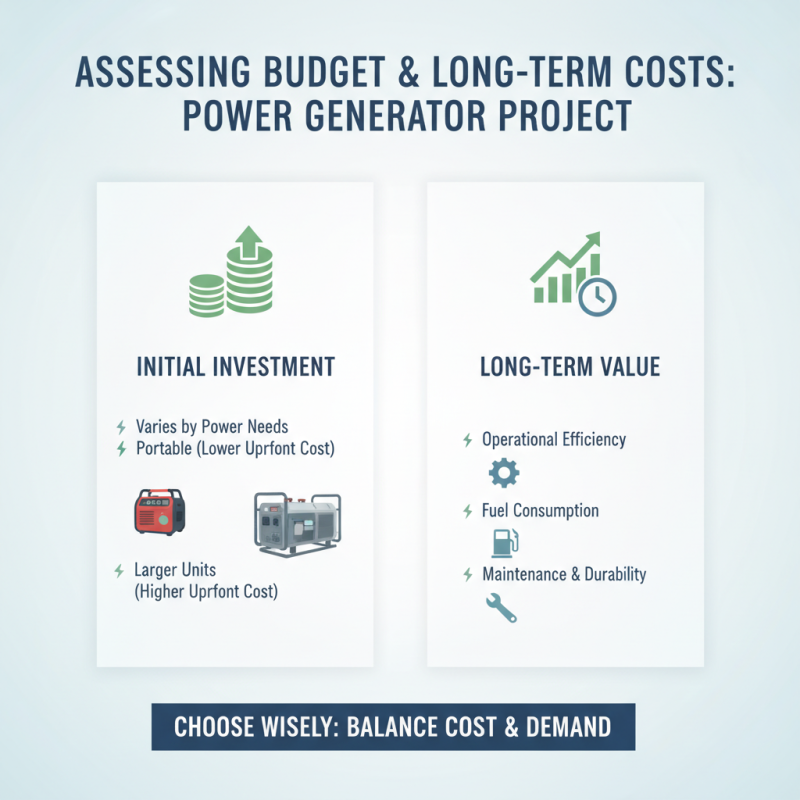
When considering a power generator project, budget and long-term costs are paramount. Understanding your initial investment is crucial. Initial expenses can vary based on power requirements. A portable generator might be cheaper upfront, but may not meet higher demands. Likewise, larger units offer more power. However, they typically come with increased costs.
Maintenance is a significant ongoing cost. Regular upkeep ensures longevity and efficiency. Neglecting maintenance can lead to larger repair bills. Fuel costs can add up over time, especially for larger generators. Analyze your energy needs to determine fuel types and consumption rates. Consider how often you’ll use the generator; occasional use could lead to different cost calculations than frequent use.
Evaluate warranties and service agreements. Not all generators come with comprehensive coverage. A good warranty can save you from unexpected expenses. Moreover, think about the environmental impact of your choice. Greener options may have higher initial costs but can lead to savings through lower fuel consumption. Balancing upfront costs and long-term savings requires thoughtful analysis.
Considering Portability and Size for Specific Uses
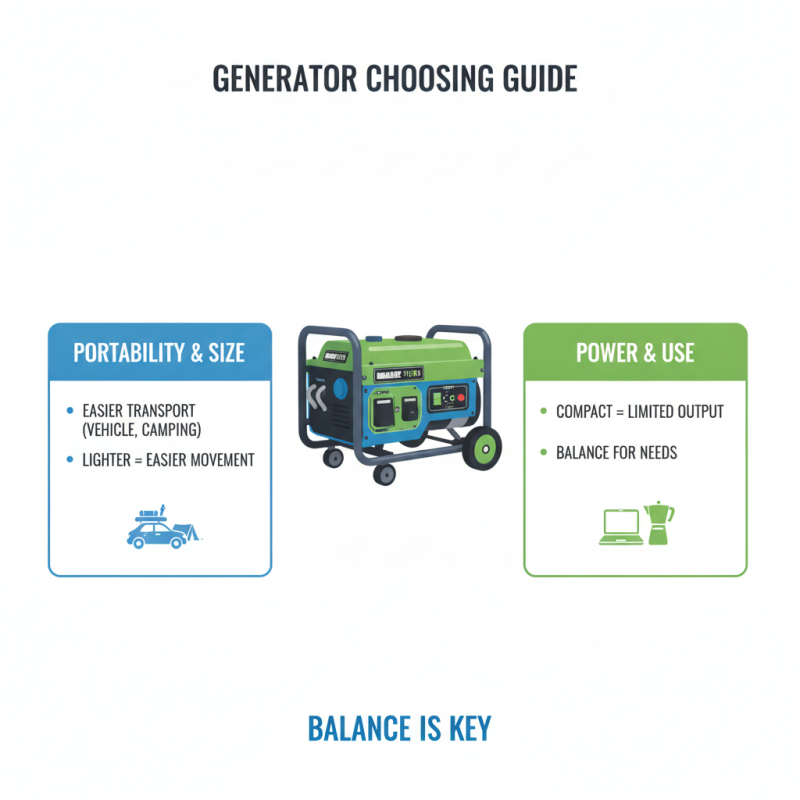
When choosing a power generator, consider portability and size carefully. A compact unit can fit easily in your vehicle, making it ideal for camping or tailgating. If you plan to move your generator often, a lighter model can significantly ease transportation. However, smaller generators may have limited power output. Balance is key.
For construction projects, a larger generator might be necessary. These can provide power for tools and equipment. While they require more space, their capacity is often essential. However, you might struggle to transport them. Measure your space and workflow needs before deciding.
Sometimes, you may find that you chose a generator that doesn't quite meet your needs. Reflecting on this can lead to better choices next time. Consider where you will use the generator most often. Will a portable option work, or do you need something robust and stationary? Your unique requirements will guide the decision-making process.

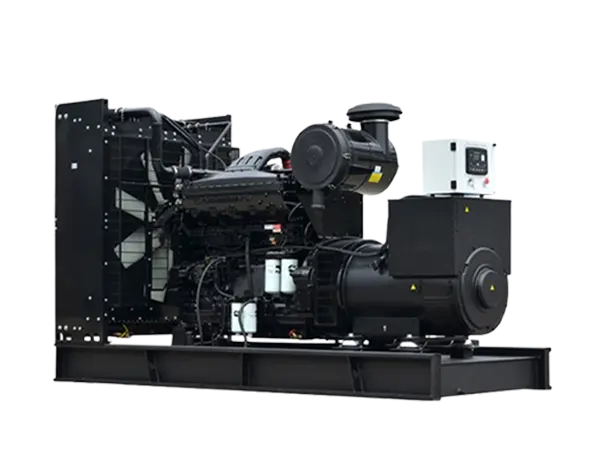 Diesel Generator Sets with Cummins Engines, XHZC Series
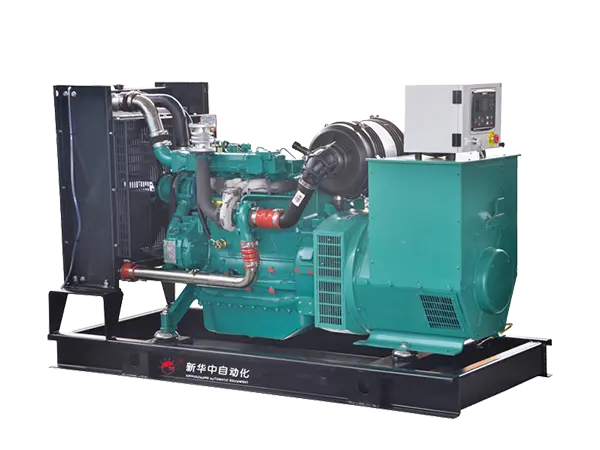 Weichai Series
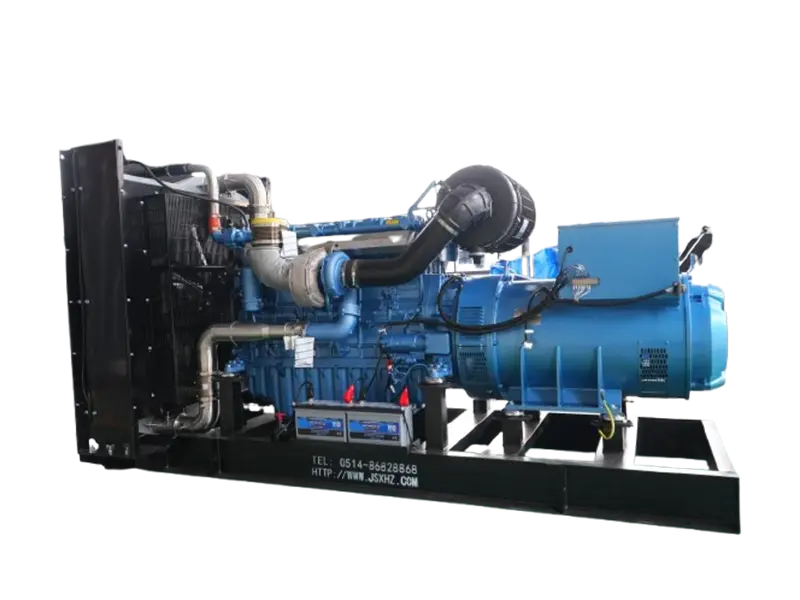 Diesel Generator Sets with WEICHAI Engines, XHZW Series
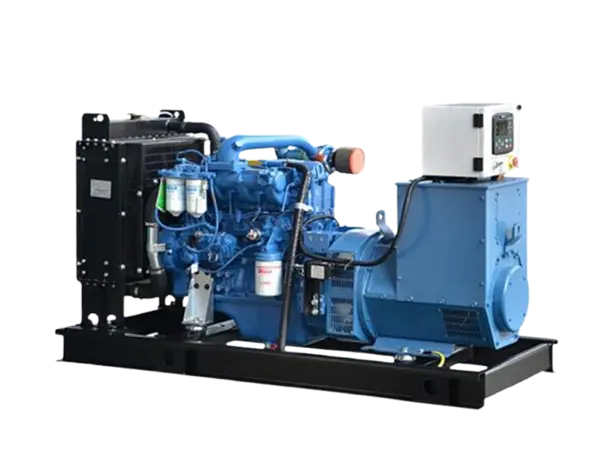 Yuchai Series
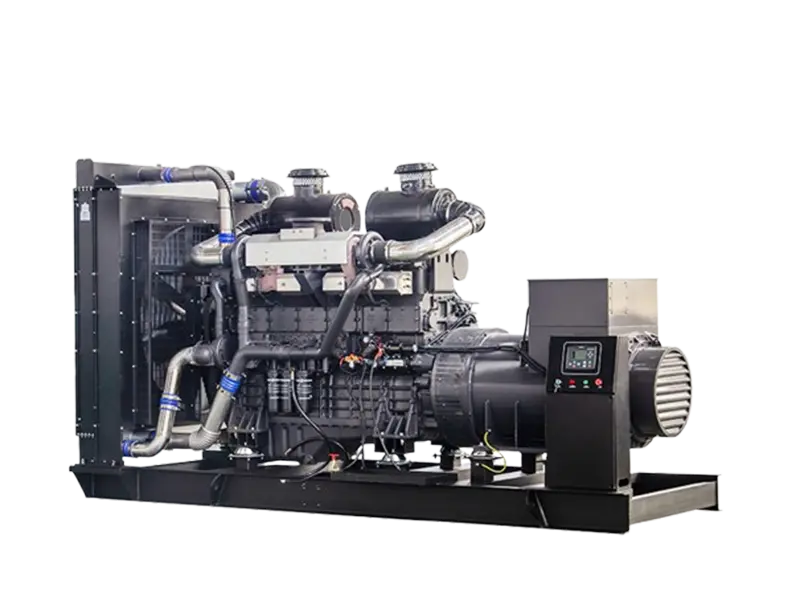 Diesel Generator Sets with SDEC(SHANGCHAI) Engines, XHZS Series
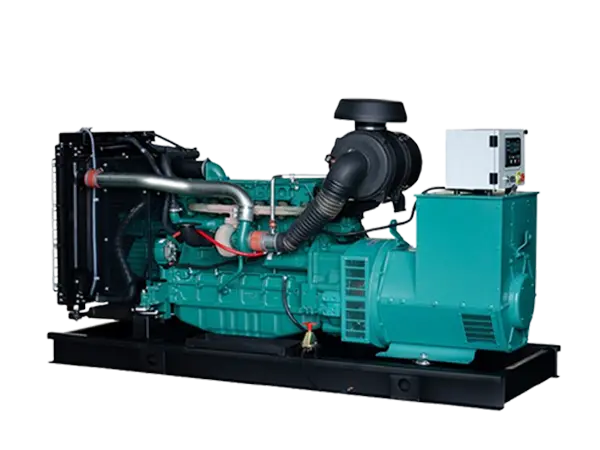 Volvo Series
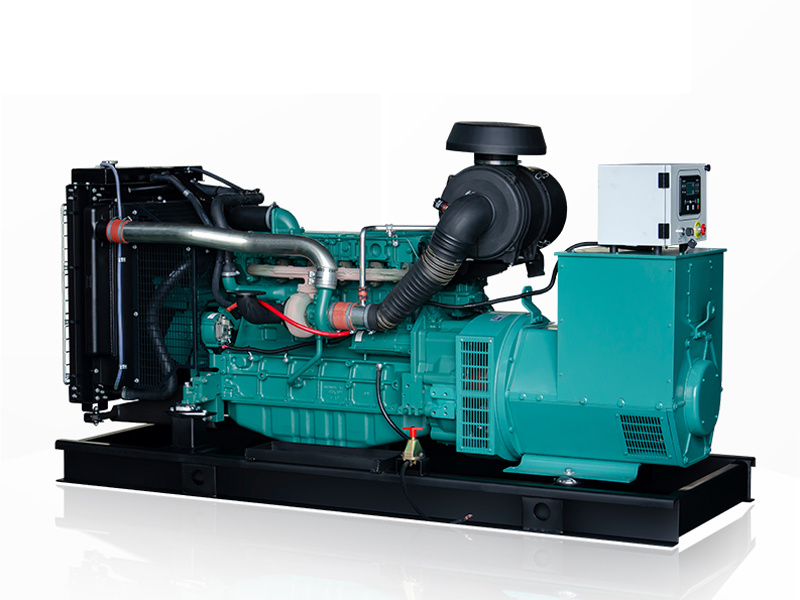 Diesel Generator Sets with VOLVO Engines, XHZV Series
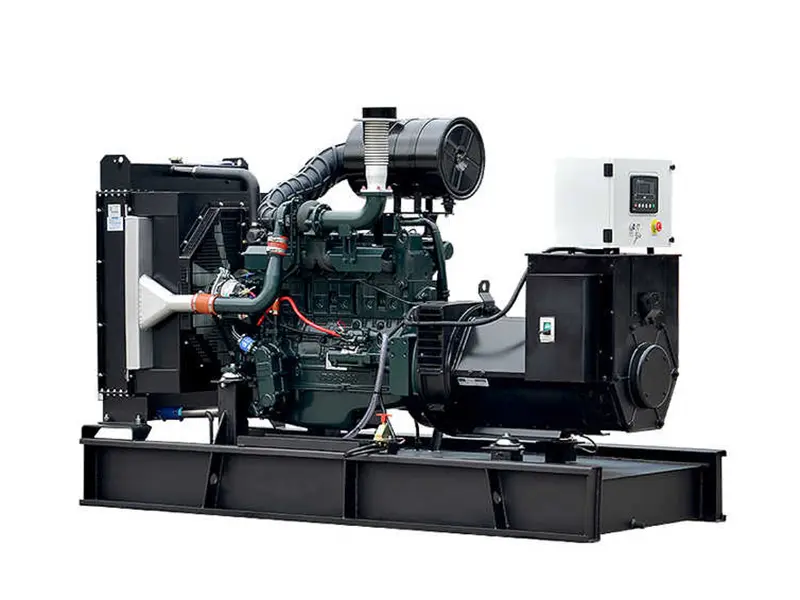 Diesel Generator Sets with Doosan Engines
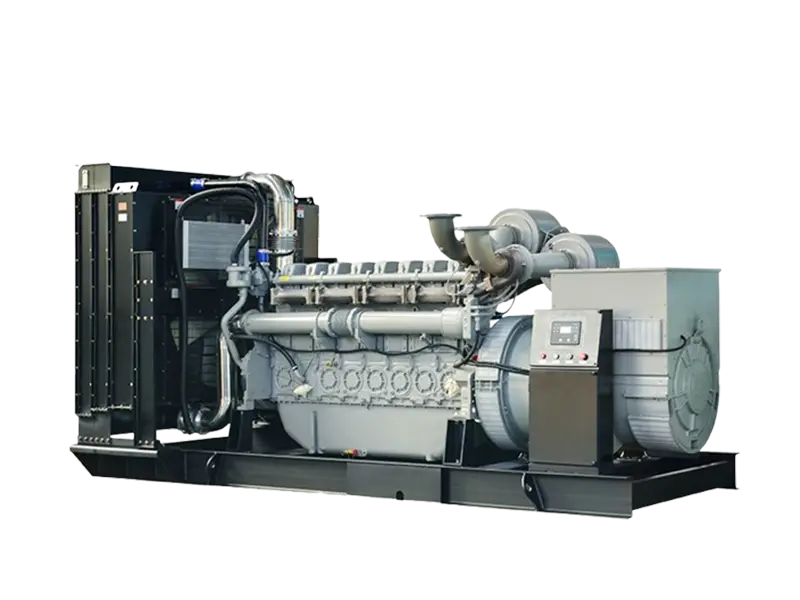 Diesel Generator Sets with Perkins Engines, XHZP Series
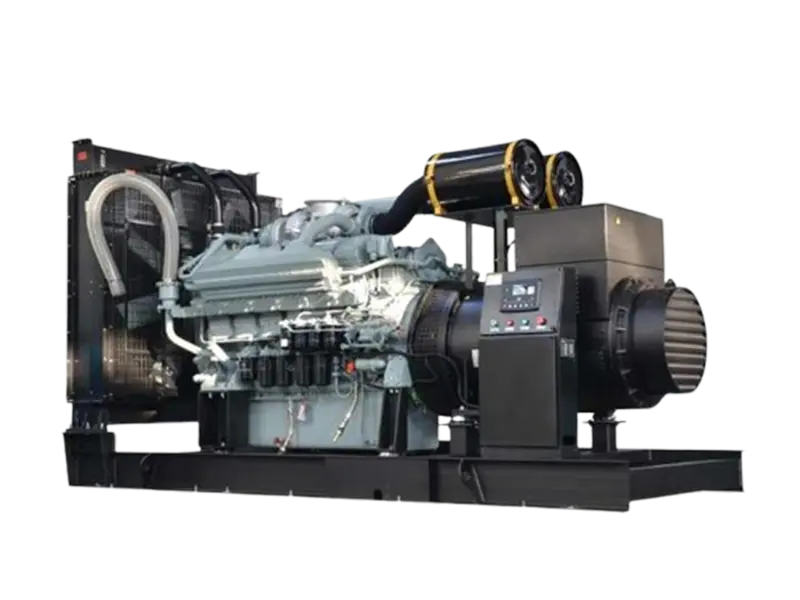 Diesel Generator Sets with Mitsubishi Engines
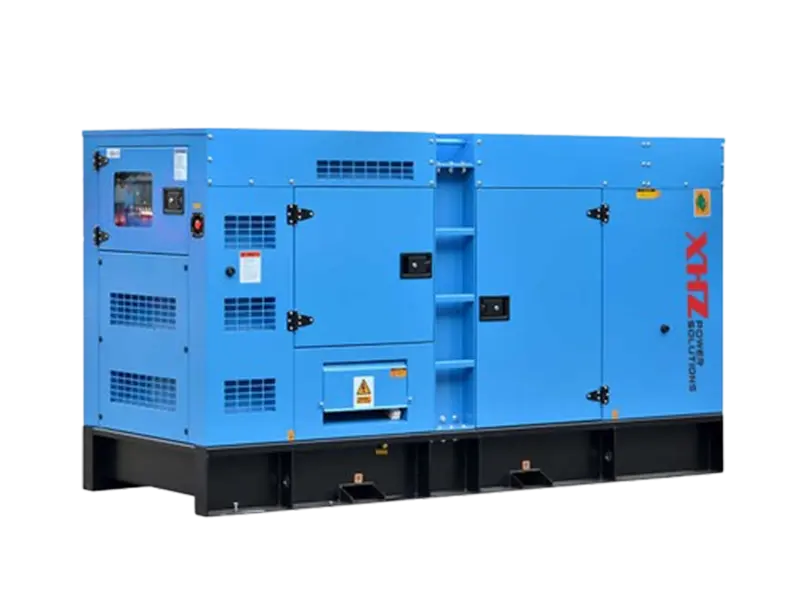 Silent Diesel Generators
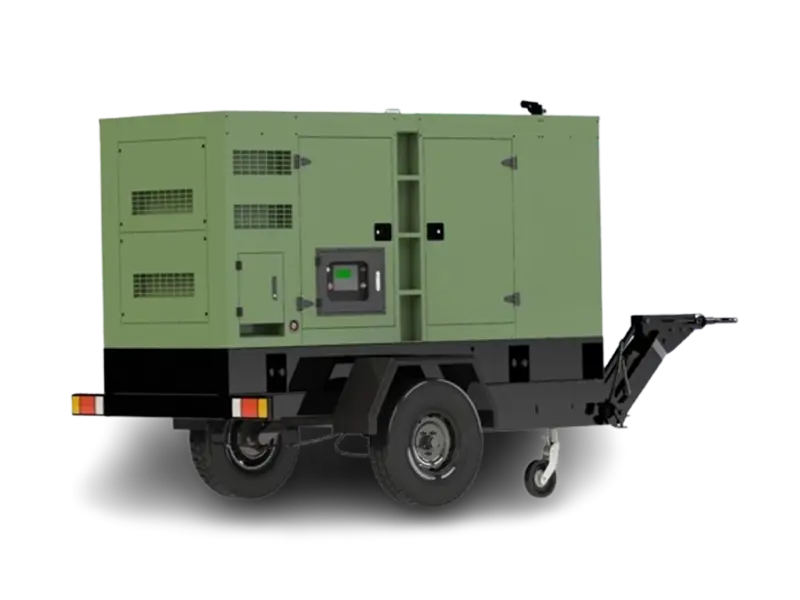 Mobile Silent Diesel Generators
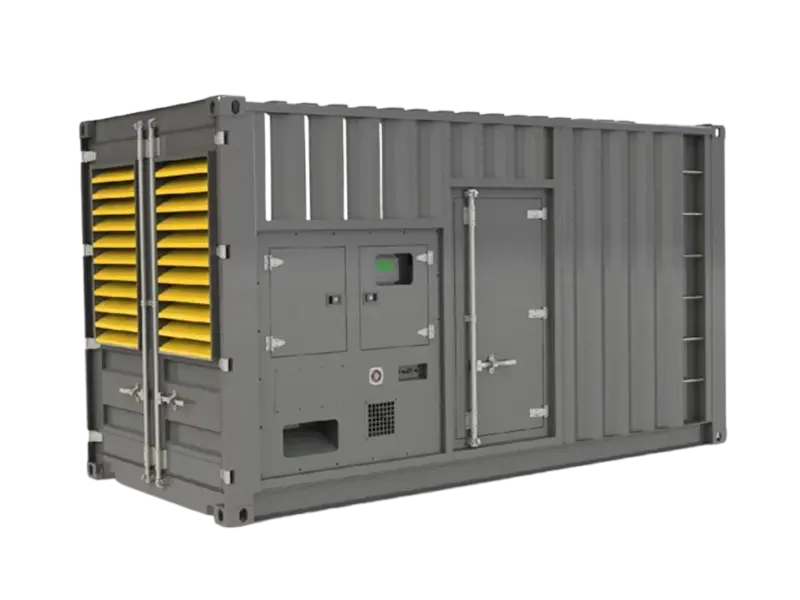 20/40HQ-Standard Container Type Generators